

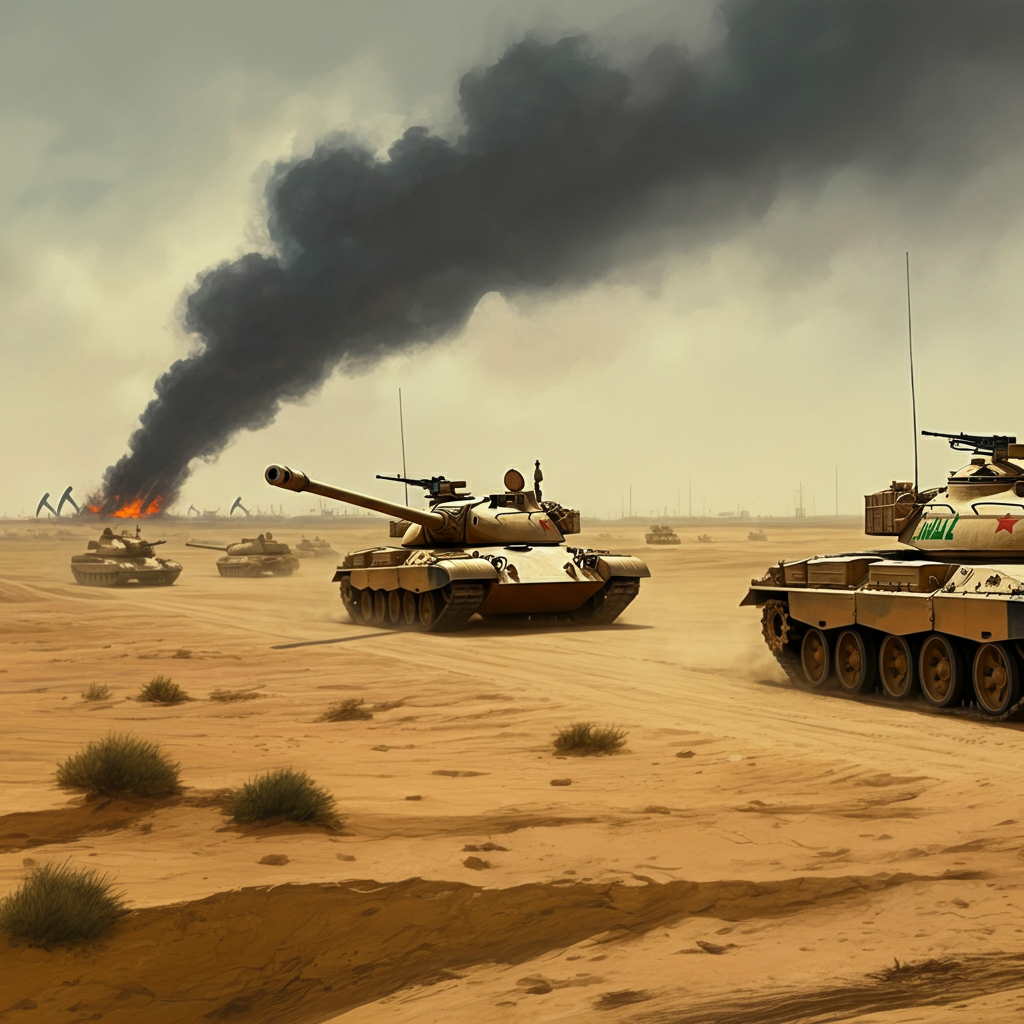
The invasion of Kuwait by Iraq in August 1990 marked a significant turning point in Middle Eastern geopolitics and set the stage for one of the most consequential military operations of the late 20th century. On August 2, 1990, Iraqi forces, under the leadership of President Saddam Hussein, launched a swift and aggressive invasion of Kuwait, claiming historical territorial disputes and accusing Kuwait of overproducing oil, which allegedly harmed Iraq’s economy. Within hours, Iraqi troops overwhelmed Kuwaiti defenses, and the small, oil-rich nation was annexed as Iraq’s 19th province. This act of aggression was met with widespread international condemnation, as it violated Kuwait’s sovereignty and threatened the stability of the Gulf region, a critical hub for global oil supplies.
In response, the United States, under President George H.W. Bush, spearheaded a coalition of nations to counter Iraq’s actions. This effort, known as Operation Desert Shield, began in August 1990 and involved the deployment of hundreds of thousands of troops to Saudi Arabia to deter further Iraqi aggression and to prepare for potential military action. The operation was a massive logistical undertaking, with coalition forces from over 30 countries working together to build a defensive posture in the Gulf. Desert Shield not only showcased the importance of international cooperation but also set the stage for the subsequent Operation Desert Storm, which would liberate Kuwait in early 1991. The events of 1990 underscored the global community’s commitment to upholding international law and protecting the sovereignty of nations.